Skip the loop. Let AI topology-optimise your packaging
qDesign is QPT's AI-driven generative design system for the qAttach thermal interface layer. It programmatically generates, simulates and iterates the qAttach geometry for any power module, replacing weeks of human-in-the-loop CAD cycles with minutes of automated opimisation, and discovering complex topologies a human designer would never reach.
Every power module is different. Die size, substrate stack, heatsink interface, target lifetime, operating envelope. The qAttach geometry that extracts the most performance for one module is not the same as for another. qDesign tunes the qAttach layer to your specific system, automatically, with full simulation traceability from parametric inputs through to engineering drawings.
The qDesign Pipeline
Step 01 — Generate
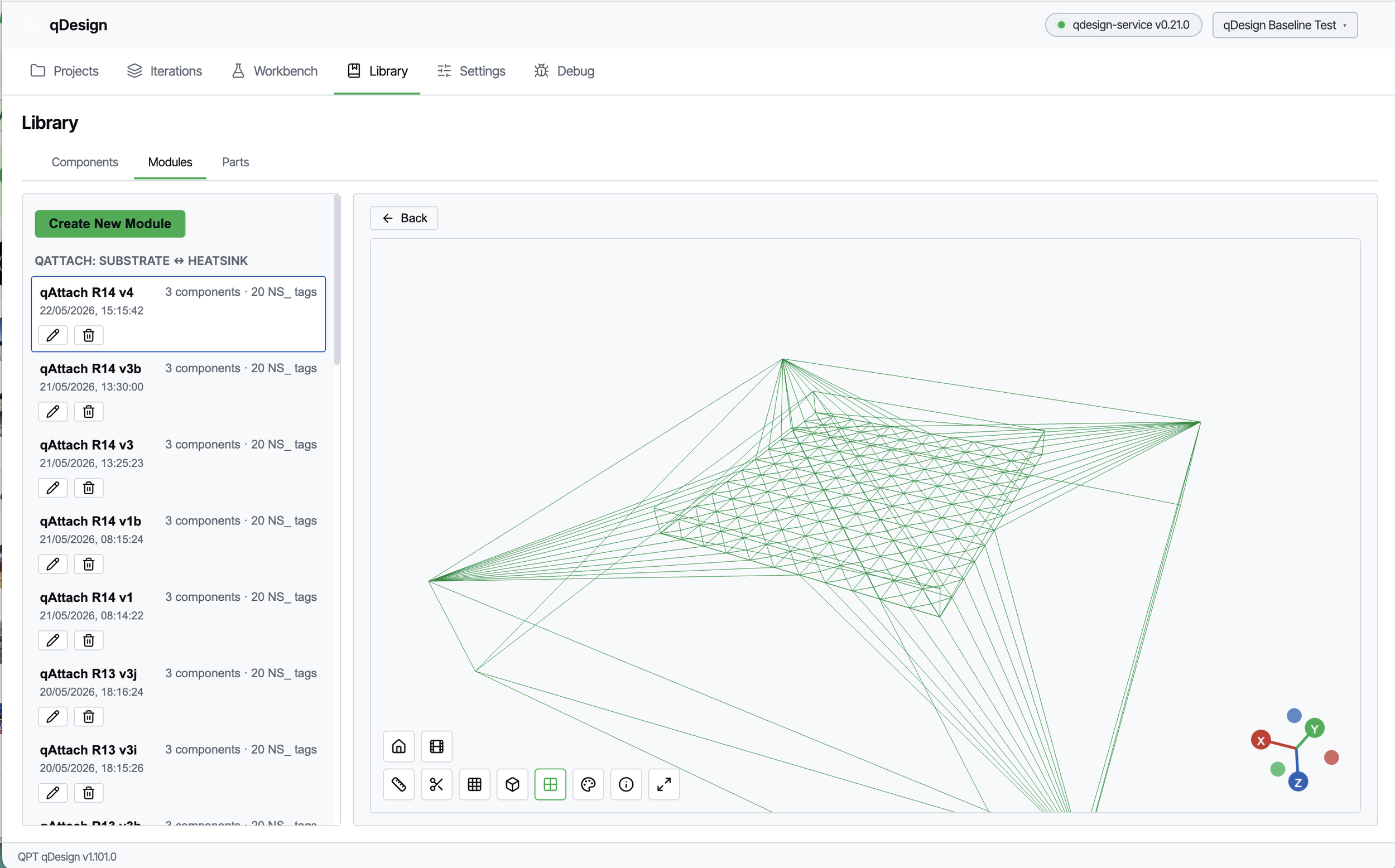
Generates the qAttach layer for any system. A trained AI model produces a qAttach geometry that integrates with your existing module, creating the substrate, die and heatsink interface in one automated step.
What this means for you: You provide the module specification; die footprint, substrate stack, heatsink interface, thermal and stress targets. qDesign generates candidate qAttach geometries that fit your existing module without forcing redesign elsewhere. Each candidate is parametrically described, fully constrained, and ready for simulation.
Step 02 — Simulate
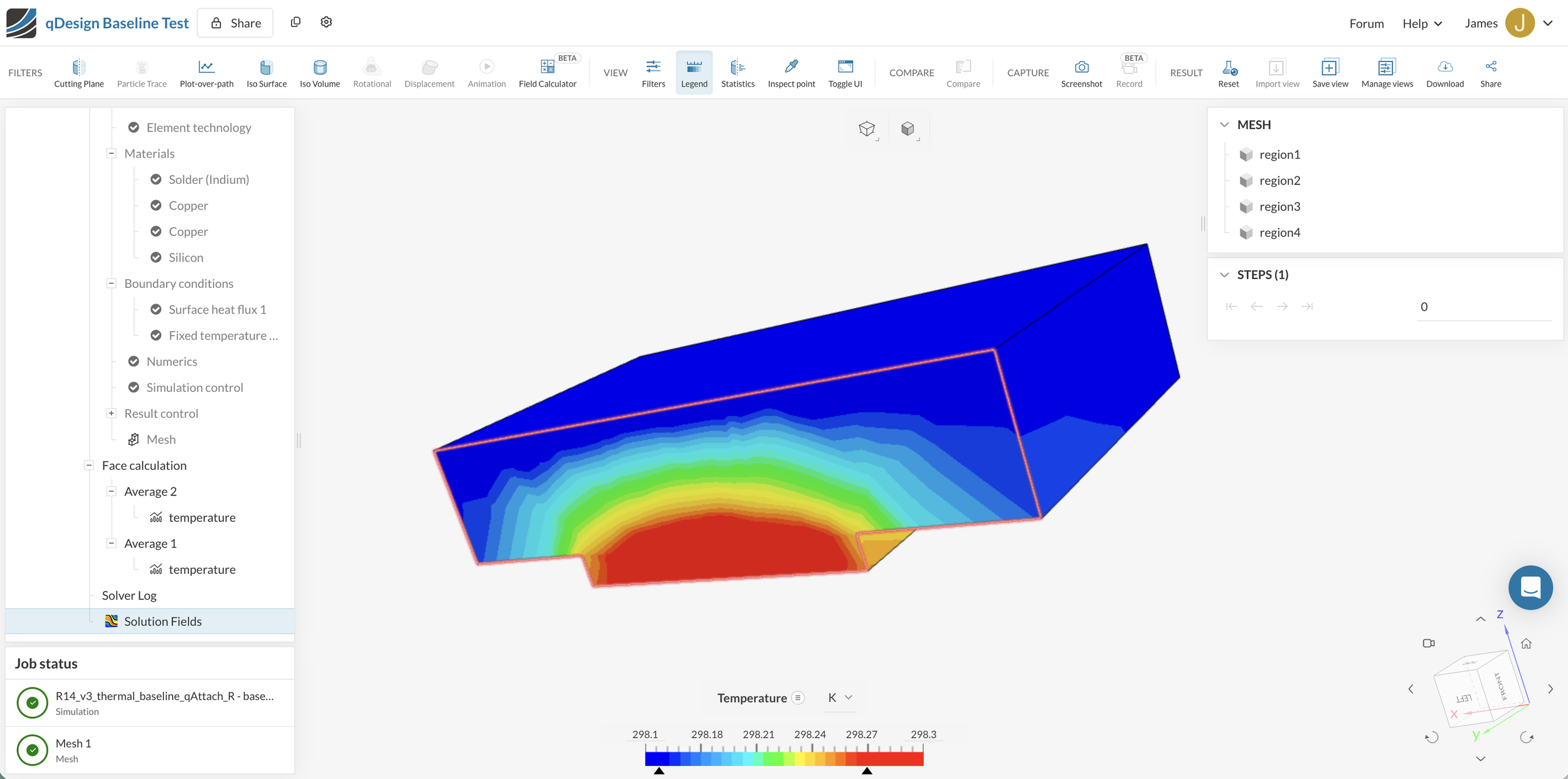
Dispatches to cloud FEA for thermal and stress testing. Each candidate is sent straight to a cloud finite-element solver for full thermal and mechanical evaluation — no manual setup, no idle engineer time.
What this means for you: No simulation engineer is allocating eight hours to set up boundary conditions for each candidate. qDesign handles materials assignment, boundary binding, mesh generation, solver dispatch and results extraction automatically. A candidate that would take a day to evaluate manually is evaluated in minutes. The thermal field and stress concentrations are captured for every revision, so the next generation knows what to improve.
Step 03 — Iterate
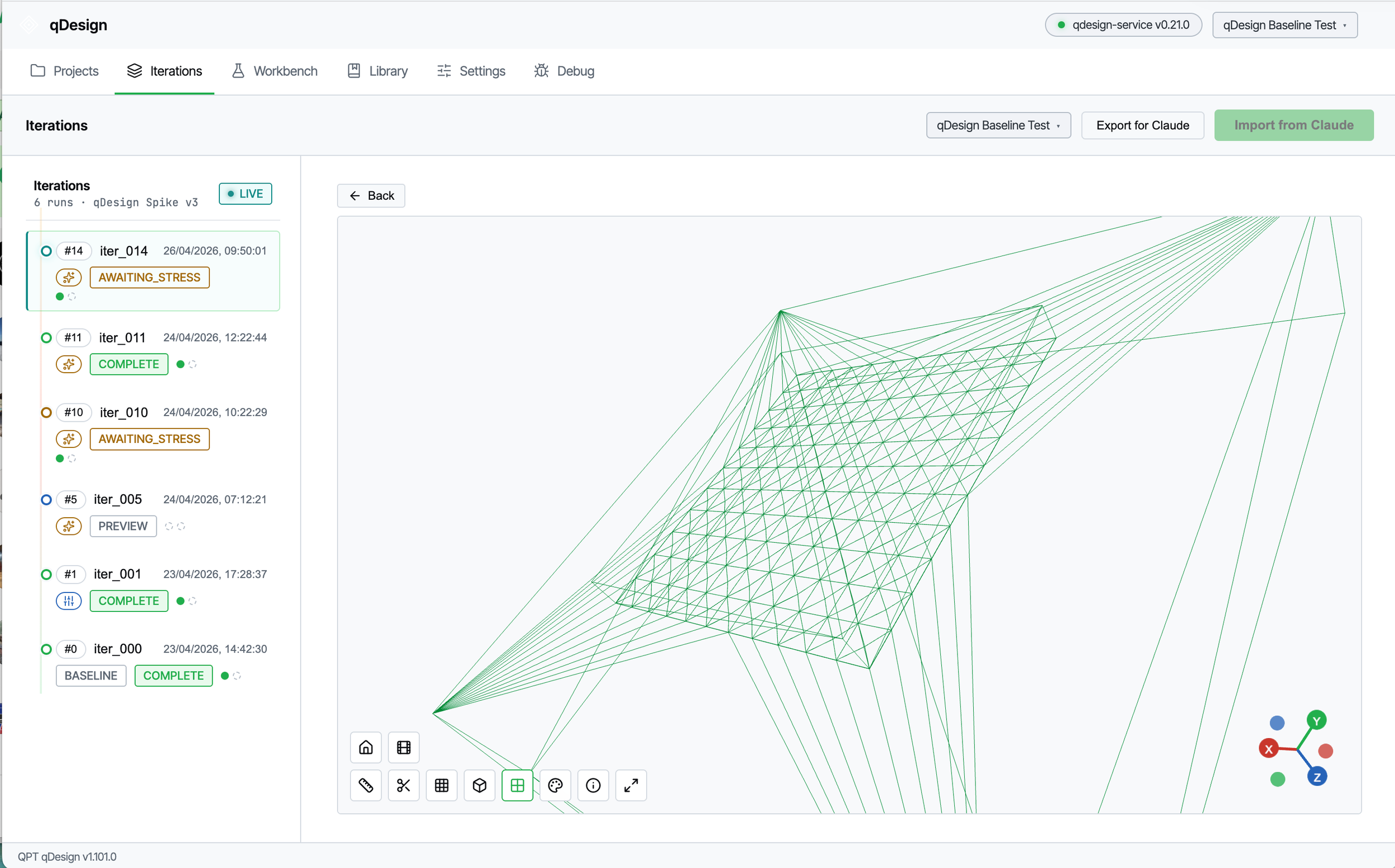
Iterates to the optimal qAttach geometry. Results gate the next generation. The loop closes itself, converging on a layer tuned to your specific system, thermal and reliability requirements.
What this means for you: Each revision learns from the last. The system explores the design space intelligently — not random search, not exhaustive sweep, but targeted exploration informed by what previous candidates revealed. Topologies that no human designer would propose emerge naturally from this loop. Every revision is preserved with its inputs, simulation results and lineage, so you can see exactly how the converged design was arrived at.
Step 04 — Report
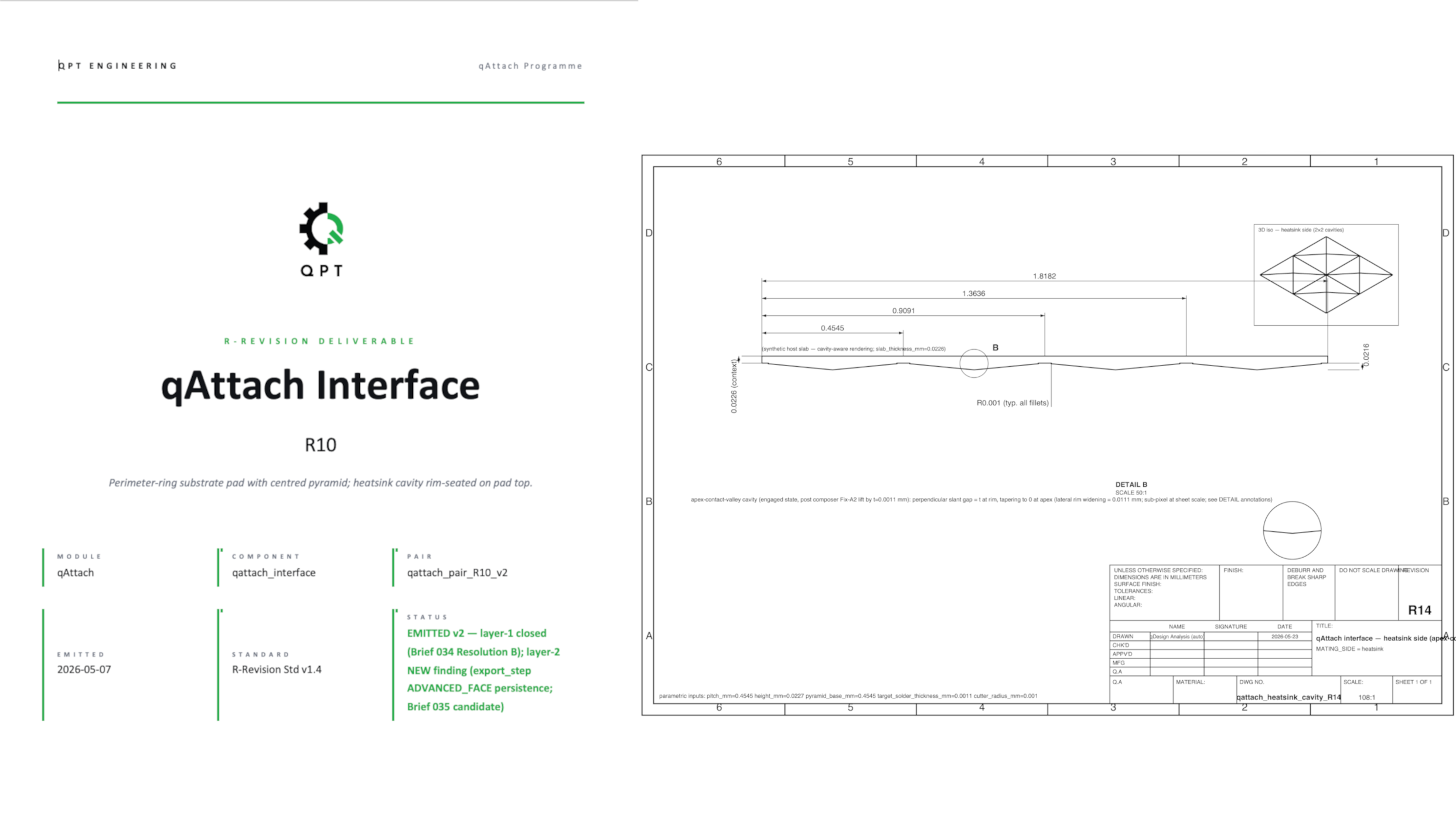
Emits a technical report and engineering drawings. AI-generated revision deliverables. Technical drawings, parametric inputs and a traceable status, ready for human-in-the-loop review.
What this means for you: Every revision is captured as an audit-ready deliverable. Dimensioned engineering drawings, parametric input table, simulation result summary, and a status record showing where this revision sits in the lineage. Your engineering team reviews real drawings against real simulation data — not slideware. The deliverable is ready for design review, manufacturing handoff, or downstream qualification.
What you get from a qDesign engagement

An optimised qAttach geometry
A qAttach layer tuned to your specific die, substrate stack, heatsink interface and thermal envelope. Not a standard part. Not a parameter sweep of a fixed design. A geometry that emerged from intelligent exploration of the design space for your module.

Full simulation lineage
Every candidate evaluated during the optimisation, with its thermal and stress results preserved. You see not just the converged design but the path to it — including the candidates that didn't work and why. This makes design review substantive and defensible.

Production-ready deliverables
Dimensioned engineering drawings, parametric inputs, simulation result summaries, and revision lineage. Ready for design review, manufacturing handoff, or downstream qualification.
What qAttach unlocks

15× the thermal performance
Compared to conventional sintered die-attach. Pulls junction heat out faster, at lower ΔT, with no exotic materials. The qAttach process operates at lower pressures than sintering, reducing mechanical stress on dies during assembly and improving yield.

Ultra-high switching speeds
Combined with QPT's low-parasitic-inductance packaging, qAttach unlocks MHz-class GaN switching. This is the thermal headroom that makes the next generation of motor drives, PSUs and traction inverters viable.

Higher performance and lower costs in motor drives
true sine-wave voltage to the motor lifts efficiency by up to 10%, cuts motor cost by up to 20%, and unlocks high-precision control from lower-cost motors.
Ready for AI data-centre PSUs
Ultra-high-frequency switching delivers up to 10× the power density of next-generation 800 V power supplies. The thermal envelope of conventional packaging is the limiting factor today; qAttach removes it.
Who qDesign is for
qDesign is offered as a partnered engineering service to semiconductor manufacturers, power module OEMs, and system integrators developing GaN, SiC or silicon-based power modules where thermal performance is a binding constraint. Typical engagements start with a module specification — die geometry, substrate stack, heatsink interface, target thermal and stress envelope — and deliver a tuned qAttach geometry together with full simulation lineage and engineering drawings within weeks rather than months.
Arrange a demo to learn more
We’d be delighted to show you the platform remotely or in our Edinburgh R & D facility. Please just get in touch to arrange a meeting.